

Last Updated: November 13, 2026
Quick Summary
To share classroom responsibilities fairly, map every recurring duty and agree on one owner, one supporter and one backup for each. Then support the arrangement with a shared weekly planning routine, clear handover habits, roles matched to each educator's strengths, and regular workload reviews that catch imbalance early.
- Build a one-page responsibility matrix listing each duty's owner, supporters and backup.
- Include assistants and support staff explicitly in the matrix, not just educators.
- Protect a 30-minute weekly planning block and rotate the planning lead each term.
- Keep a shared handover book so completed tasks are recorded and nothing is repeated.
- Run a 15-minute monthly workload check in one-on-ones and follow up on agreed changes.
Table of Contents
- Why Shared Classroom Responsibilities Get Lopsided
- 1. Map Out Roles and Responsibilities Together
- 2. Build a Shared Weekly Planning Routine
- 3. Set Up Clear Communication Habits Between Educators
- 4. Match Support Roles to Each Educator's Strengths
- 5. Review Workload Balance Regularly and Handle Unfair Load Early
- Start Your Team's Shared Ownership Conversation This Term
- Frequently Asked Questions
Getting to share classroom responsibilities fairly is one of those things every centre director says they want, yet it's often the first thing to slip when the roster is short and the week is full. Here's the honest reality: when duties aren't clearly shared, a few educators end up carrying far more than their fair share, and resentment builds quietly. The good news is that it's fixable with clear structures and regular conversations, not a complete overhaul.
Why Shared Classroom Responsibilities Get Lopsided
Most imbalance isn't deliberate. It happens because the loudest educator takes charge, the most reliable one absorbs the extra jobs, and the newer team member never gets asked. Over time, the tasks that nobody wrote down, like restocking the nappy change area or following up with a family, quietly land on the same people.
Lopsided workloads can also affect your team's wellbeing and retention. Naming the pattern early is the first step toward changing it, so you can share classroom responsibilities more evenly before resentment sets in.
1. Map Out Roles and Responsibilities Together
Start by listing every recurring duty in your room or service: setup and pack-down, observations, parent communication, incident reports, outdoor supervision, cleaning rotations, restocking and follow-up. Then sit down with your team and agree on who owns what.

Don't hand this down from the top. When educators help build the map, it's more likely to hold up in practice. The trick is to make the map specific enough that nobody has to guess, and broad enough that it covers the duties that usually go unwritten.
Build a simple responsibility matrix
A matrix is just a grid: duties down one side, people across the top. For each duty, agree on one owner (accountable for it happening), any supporters (who help), and a backup (who steps in when the owner is away). Keep it to one page and display it where the team can see it.
A workable starting point for most rooms looks like this:
- Program planning, owner rotates each term; one supporter reviews the plan before it goes live.
- Observations and documentation, each educator owns observations for a small group of children; the educational leader checks coverage weekly.
- Room setup and pack-down, split by zone (indoor, outdoor, sleep area) rather than by person, so the duty travels with the space.
- Behaviour support, one owner per room, with a backup who knows the child's support plan.
- Assessment and learning records, owner per age group, with a shared folder so nothing lives only in one person's head.
- Family communication, a named contact per family, plus a shared log so handovers are consistent.
- Follow-up tasks (incident reports, restocking, maintenance requests), a single owner who checks the log each shift.
Include assistants and support staff properly
Most shared-responsibility advice stops at educator-to-educator collaboration, which leaves assistants, inclusion support staff and specialists out of the conversation. That's a gap worth closing, because these team members often carry the most routine tasks and the least recognition for them.
Name their duties explicitly in the matrix, setting up resources, supporting a specific child's plan, preparing materials, supervising transitions, and give them the same owner, supporter and backup structure as everyone else.
How to make it happen
Bring a large sheet of paper or a shared digital document to your next meeting. Ask each educator to write down the duties they currently do, then combine the lists and fill the gaps. Agree on owners, supporters and backups for each task, and set a date to review the map in four weeks.
Watch out: if the same name appears as owner on more than a third of the duties, the matrix is telling you something, redistribute before you publish it, or you'll formalise the imbalance you were trying to fix.
2. Build a Shared Weekly Planning Routine
When planning is left to one person, everything else tends to follow the same pattern. A regular, shared planning block spreads ownership of the program, the observations and the room set-up across the whole team.
Rotate the planning lead each week or each term, so everyone builds skills and understands the workload behind the program.
How to make it happen
Set aside a 30-minute protected slot each week, ideally when the room is covered. Use a simple template with three columns: what's planned, who's leading it, and what support is needed. Review it briefly at the start of each week so that tasks are never assumed.
3. Set Up Clear Communication Habits Between Educators
Many workload problems are really communication problems. An educator who doesn't know a task has been done will often do it again, or assume it's still waiting for them. Simple, consistent habits prevent this.
Team meetings give these habits a regular home. Use them to check in on shared tasks, not just to pass on information.
How to make it happen
Start a shared handover book or digital log where educators record completed tasks and anything that needs follow-up. Add a two-minute "who's doing what" check to the start of each shift or team huddle. Within a few weeks, most of the guesswork disappears.
4. Match Support Roles to Each Educator's Strengths
Shared responsibility doesn't mean every educator does exactly the same things. Some people are natural organisers, some are strong with families, and some have a real gift for engaging children in literacy or music. Matching duties to strengths makes shared work feel fair and productive rather than forced.
Be sure to include assistants and support staff in this conversation. Their contribution is easy to overlook, and they often carry the most routine tasks.
How to make it happen
Ask each educator to name two tasks they enjoy and one they'd prefer to avoid. Use those answers to draft role assignments, then check in with each person one-on-one before finalising them. Revisit assignments each term as skills and interests change.
5. Review Workload Balance Regularly and Handle Unfair Load Early
Even a well-designed roster drifts over time. Staff move, new jobs appear, and someone starts saying yes to everything. Scheduled reviews catch these shifts before they turn into frustration.
Know what you're actually measuring
"It feels fair" isn't a measure. Pick a handful of simple indicators and check them at the same time each month:
- Workload balance, count how many duties each person owns on the matrix. If one or two names keep appearing, that's your signal.
- Planning consistency, is the weekly planning block actually happening, and is the lead rotating as agreed?
- Staff perceptions, one quick question in a one-on-one: "On a scale of one to five, how manageable does your workload feel right now?" Track the trend, not the single answer.
- Follow-through, are handover log items being closed, or are the same tasks rolling over week after week?
- Participation, are all educators, including assistants and part-timers, contributing to planning and reviews, or have a few voices gone quiet?
A common pattern is that the dependable educator absorbs every gap. The indicators above surface that early, before it becomes a resignation conversation.
Have a process for when it feels unfair
When you notice an imbalance, address it promptly and privately. Ask open questions rather than assuming the cause, and be willing to adjust the roster quickly. A simple three-step process keeps it calm:
- Raise it early and specifically. "I've noticed you've picked up the restocking and the family follow-ups for three weeks running. Can we talk about what's sustainable?"
- Re-negotiate the duty, not the person. Move the task, add a backup, or change the rotation, avoid framing it as a performance issue.
- Document the agreement. A short note in the matrix or meeting minutes, with a review date, stops the same conversation repeating.
If a concern is raised with you, a useful script is: "Thank you for telling me, I'd rather hear it now than later. Let's look at the matrix together and work out what needs to shift." Then follow up at the next review to confirm the change is working.
How to make it happen
Add a 15-minute workload check to your monthly one-on-ones. Ask each educator: "Which tasks feel heavy right now, and which feel manageable?" Keep a simple record of agreed changes, and follow up at the next review to confirm they're working.
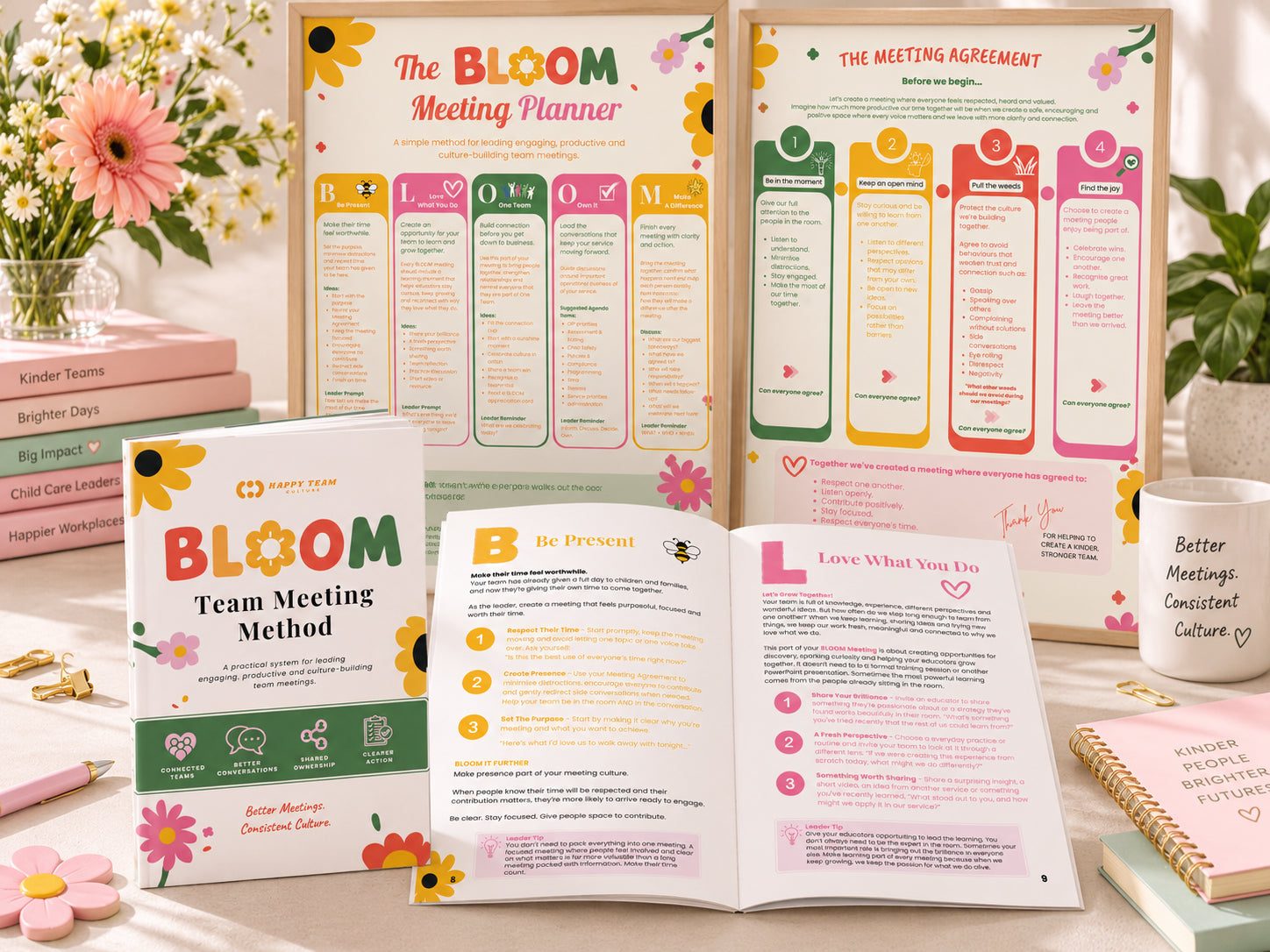
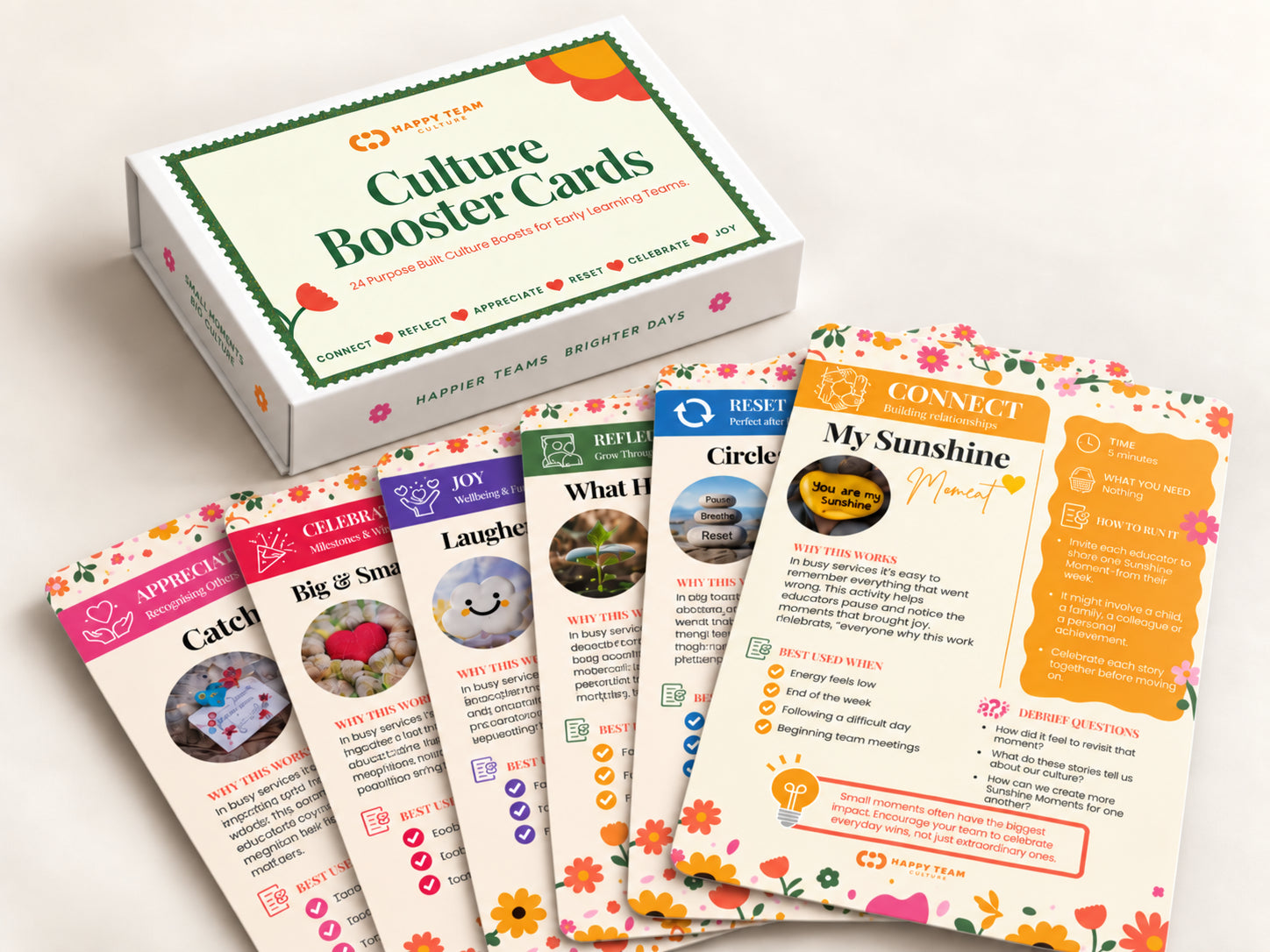
If you're looking for practical ways to bring these conversations into your team's regular rhythm, the team meetings resources can help you build workload checks into everyday routines. Our staff meeting method gives you a structure for planning and reviewing shared responsibilities together, and the Culture Booster Toolkit includes activities that help teams reset when roles feel unfair.
Watch out: if reviews only happen when something goes wrong, educators may learn to stay quiet until problems grow, keep the monthly check even when everything looks fine.
Scheduled reviews are easier to run when you know which indicators to watch. Here is a quick guide to what each one tells you.
| Indicator | What to check | Warning sign |
|---|---|---|
| Workload balance | Count duties each person owns on the matrix | The same one or two names keep appearing |
| Planning consistency | Is the weekly planning block happening? | The planning lead isn't rotating as agreed |
| Staff perceptions | One-on-one question rated one to five | A downward trend over several months |
| Follow-through | Are handover log items being closed? | The same tasks roll over week after week |
| Participation | Are all educators contributing to planning and reviews? | A few voices have gone quiet |
Start Your Team's Shared Ownership Conversation This Term
Shared classroom responsibilities don't happen by accident. They take clear roles, regular planning, honest communication, sensible matching of strengths, and ongoing reviews. Pick one of these five ways to start this week, and build from there.
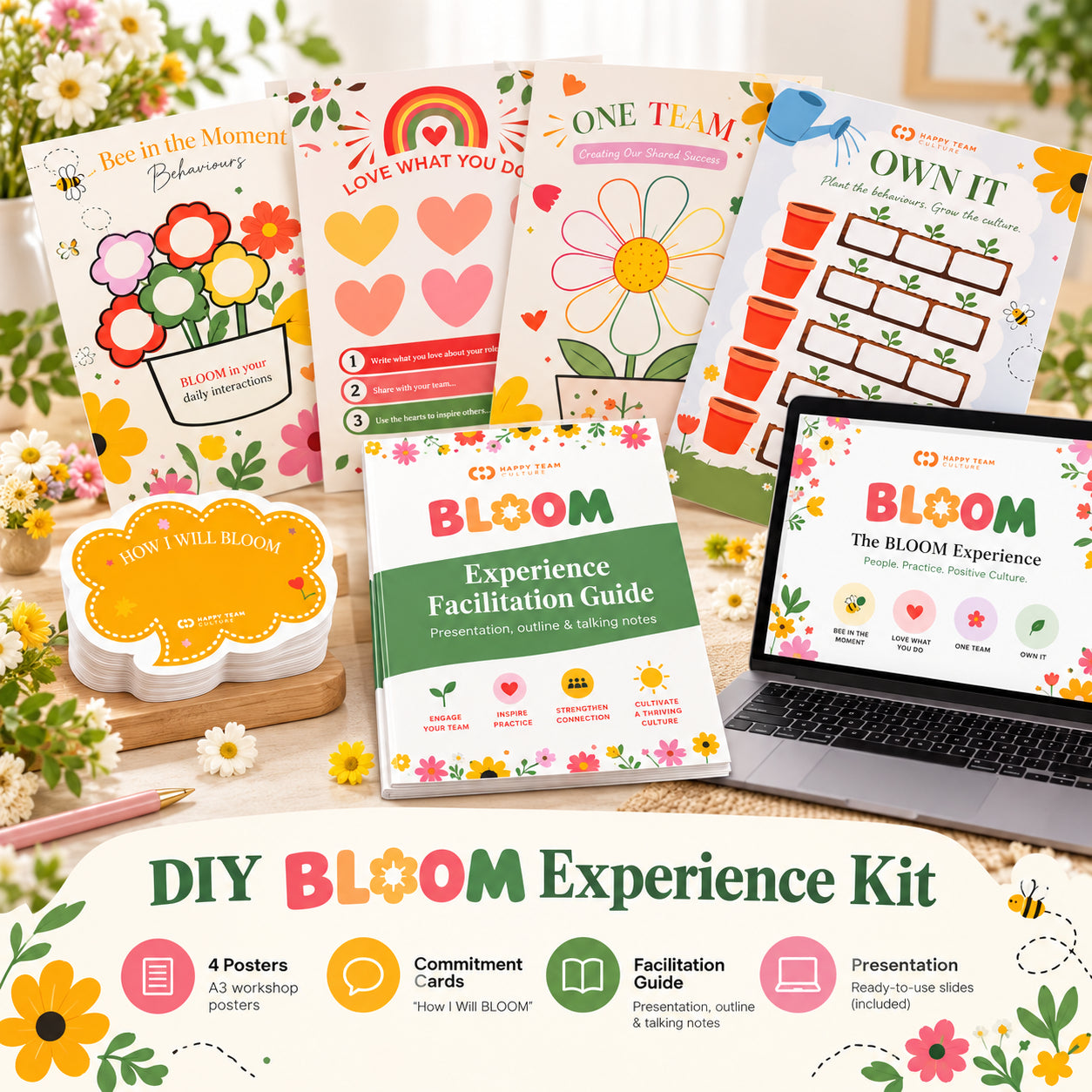
If you'd like a ready-made way to start the conversation with your whole team, the BLOOM Experience kit gives you posters, commitment cards and a facilitator guide to help everyone take ownership of how your team works together.
Frequently Asked Questions
How can educators share classroom responsibilities fairly?
Start by writing every recurring task down, from setting up the room and preparing learning materials to family communication and end-of-day cleaning. Then have the team sort those tasks by who has the time, skills and interest for them, and agree on a rotation for the jobs nobody wants. Review the split every few weeks, because a roster that looked fair in February can drift by May. Fairness usually comes from visible, agreed expectations rather than from splitting every task down to the minute.
What are some examples of teacher collaboration?
Common examples include co-planning a week of learning experiences, one educator leading group time while another sets up the next experience, and sharing observations about individual children in a quick huddle before handover. Teams also collaborate when they swap notes on what worked in a session or cover each other's breaks without being asked. Collaboration works best when it has a regular rhythm, such as a fixed planning meeting, rather than happening only when someone is struggling.
How can leaders support educators in the classroom?
Leaders can support educators by protecting planning time, making sure roles are written down, and stepping in quickly when one person is carrying more than their share. Regular, short check-ins help educators raise concerns before they turn into resentment. Recognising the everyday contributions that keep the room running, such as the educator who always restocks the art shelf, also makes a real difference to how supported people feel.
What should a team do when classroom tasks feel unevenly shared?
Name the issue calmly and privately before it reaches the wider team. Look at the actual task list together, rather than debating who feels busier, and check whether the imbalance comes from a missing role, a skill gap or an unclear expectation. Agree on one or two changes, try them for a set period, and then review. Treating the conversation as a problem to solve together, rather than a complaint to defend against, usually keeps relationships intact.

0 comments