

Last Updated: November 20, 2026
Quick Summary
Effective staff appreciation ideas for educators are small, frequent and specific: name exactly what you saw someone do and why it mattered, rather than offering vague praise or generic gifts. Build a monthly rhythm of notes, shoutouts and shared morning tea, and make sure recognition reaches every role, including casual and non-teaching staff.
- Write a handwritten note with three sentences: what you saw, why it mattered, and what it meant.
- Run a monthly rhythm with a peer appreciation round, a shared morning tea and a written note.
- Rotate who you recognise deliberately and keep a list so no one is overlooked.
- Ask three survey questions about recognition preferences, dietary needs and what would feel meaningful.
- Watch signals like whether casual staff keep accepting shifts to see if appreciation is sticking.
Table of Contents
- Why Staff Appreciation Ideas for Educators Matter More Than Ever
- Simple Teacher Appreciation Ideas That Take Less Than 10 Minutes
- Monthly Teacher Appreciation Ideas to Build a Year-Round Habit
- Teacher Appreciation Ideas from Administrators: Leading by Example
- Staff Appreciation Gift Ideas That Feel Personal, Not Generic
- How to Plan Appreciation That Fits Your Budget and Your Team
- Making Appreciation Stick: Measuring What Matters
- Start With One Small Act of Appreciation This Week
- Frequently Asked Questions
Why Staff Appreciation Ideas for Educators Matter More Than Ever
Retention is the quiet crisis in early learning right now.

Staff appreciation is the practice of consistently noticing and naming the effort, care and contribution of every person in your service, not just the ones who are easiest to spot. It is a habit, not an event.
Appreciation that lands is small, frequent and tied to what you actually saw.
Simple Teacher Appreciation Ideas That Take Less Than 10 Minutes
Quick appreciation does not need a budget line. It needs a leader who pauses long enough to name what they saw.
The Power of a Handwritten Thank-You Note
A handwritten note beats a generic gift every time. Write three sentences: what you saw, why it mattered, and what it meant for the children or the team. For more simple appreciation ideas for childcare staff that fit any budget, see our related article.
Watch out: writing "thanks for all you do" with no specifics. Vague praise reads as a checkbox. Name the moment.
Quick Wins: Snacks, Shoutouts and Small Gestures
- Leave a coffee voucher in a locker with a two-line note
- Start staff meetings with one genuine shoutout for a specific action
- Bring morning tea on a Tuesday, not just a birthday
Monthly Teacher Appreciation Ideas to Build a Year-Round Habit
One-off gestures fade. A monthly rhythm sticks, and it takes far less planning than people expect.
Pick one focus per month and repeat it: a peer appreciation round in the first staff meeting, a shared morning tea mid-month, and a written note at month's end.
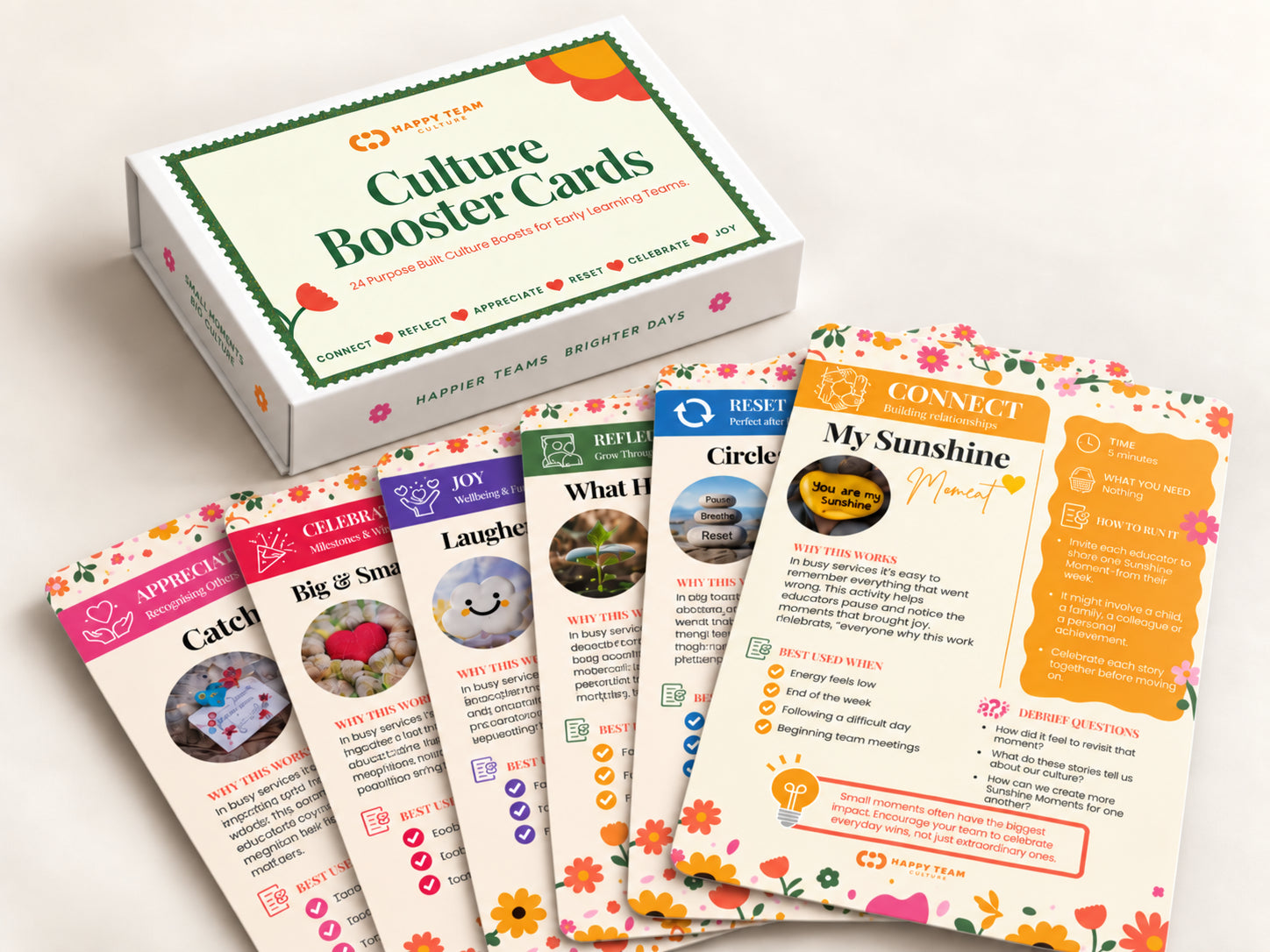
If you want a structured way to keep it going, our Culture Booster Cards include an Appreciate category designed to slot straight into staff meetings, so recognition becomes part of the agenda rather than an afterthought.
Teacher Appreciation Ideas from Administrators: Leading by Example
Administrators set the tone faster than any policy. When a director names their own gratitude out loud, educators copy the habit. But leading by example is not just about what you say in a meeting. It is about who you notice, how often, and whether the people behind the scenes get the same warmth as the people in front of the children.
Model It in the First Five Minutes of Every Meeting
Try this: in each staff meeting, share one thing you noticed about a specific educator and why it mattered. Then invite one peer to do the same. Over time, appreciation can start moving sideways through the team, not just downward from leadership.
Watch out: only ever naming the same two or three people. Rotate deliberately, and keep a simple list so you can see who you have not recognised recently.
Reach Every Role, Not Just the Room Leaders
Not everyone works directly with children, and appreciation should reach the cook, the cleaner, the admin officer, the bus driver and the casual relief educator too.
A practical way to do this is to build a simple recognition roster. List every person in the service, including part-time and casual staff, and tick off who you have named in the last month.
Run a One-Week Administrator-Led Plan
If you want a ready-to-run structure, here is a simple five-day plan an administrator or director can lead without adding hours to the week.
| Day | Action | Who leads | Time |
|---|---|---|---|
| Monday | Write three specific notes to three different people, including one non-teaching staff member | Director | 15 minutes |
| Tuesday | Open the staff meeting with one genuine shoutout and invite one peer to add theirs | Director and one educator | 5 minutes |
| Wednesday | Leave a small treat in the staff room with a sign that names who it is for and why | Admin officer | 10 minutes |
| Thursday | Ask one educator what would make recognition feel more meaningful, and act on one answer | Director | 10 minutes |
| Friday | Hand out cards or notes to anyone not yet recognised this week | Leadership team | 15 minutes |
Time
Keep the Loop Visible
When someone tells you what would help, do it visibly and say why. If an educator says they would rather have a quiet note than a public shoutout, change the format and tell the team you changed it because of feedback.
If you want a structured way to keep it going, our Culture Booster Cards include an Appreciate category designed to slot straight into staff meetings, so recognition becomes part of the agenda rather than an afterthought.
Staff Appreciation Gift Ideas That Feel Personal, Not Generic
The best staff appreciation gift ideas share one quality: they show the person was seen.
Our BLOOM Appreciation Cards are a practical way to tackle this. The set holds 50 ready-to-use cards across five themes, each with space on the back for your own personal note.
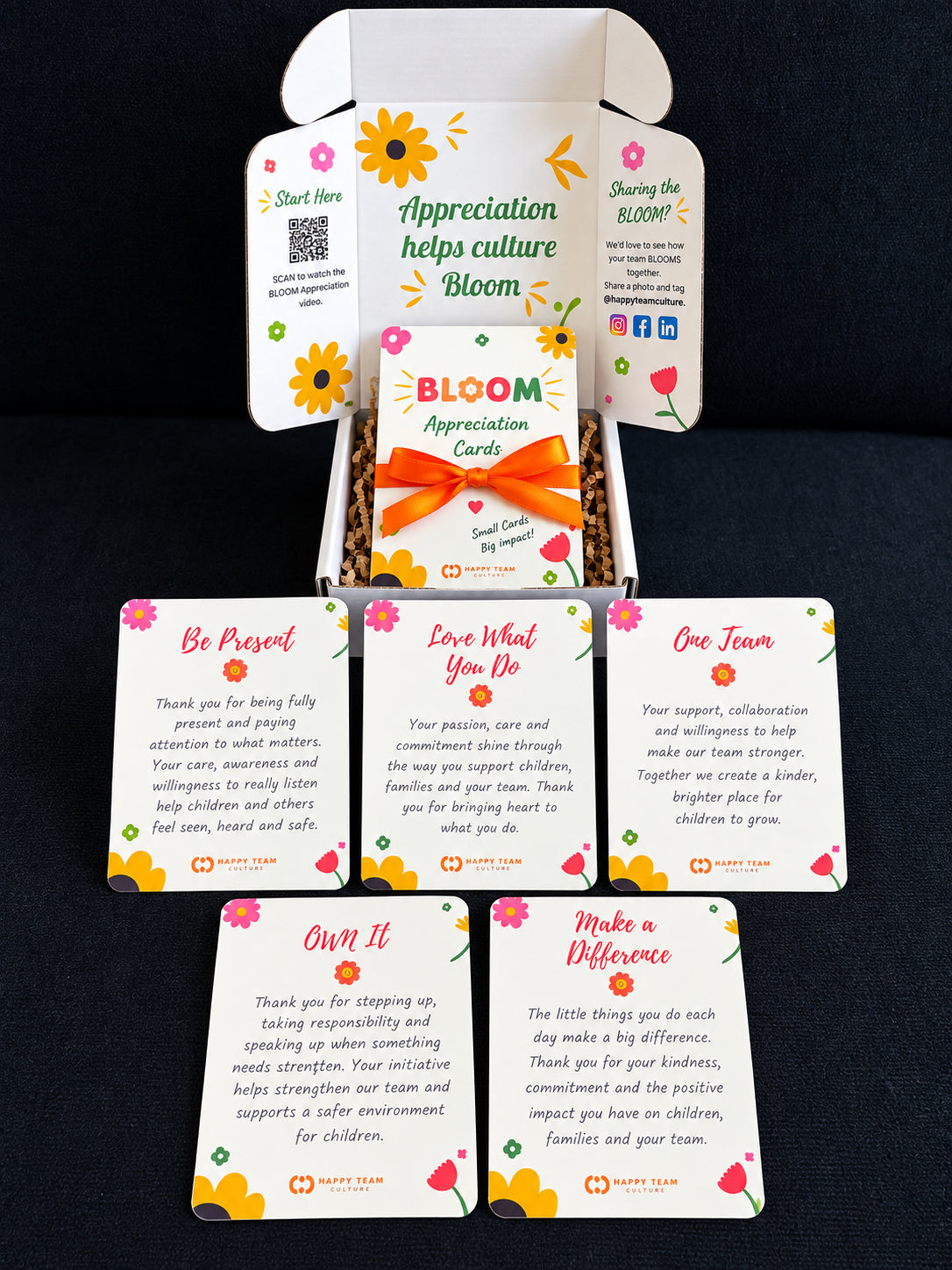
Best for: leaders who want recognition to happen in the moment, not once a term. Skip if: you are looking for a compliance record.
How to Plan Appreciation That Fits Your Budget and Your Team
Start with what you have, not what you wish you had. A simple plan beats an ambitious one that collapses in week two. The trick is to decide your budget tier before you decide your ideas, because the tier tells you how many people you can reach and how often.
Build a Budget Ladder Before You Buy Anything
Work out your total appreciation spend for the term, then divide it by the number of people on your team. That per-person figure is the number that actually matters, because it stops you from spending the whole budget on the loudest idea and leaving half the team out.
| Tier | Per-person guide | What it looks like | Planning time |
|---|---|---|---|
| No budget | $0 | Handwritten notes, verbal shoutouts, peer recognition rounds, a shared morning tea where everyone brings a plate | 10 minutes a week |
| Low budget | A few dollars per person | Coffee vouchers, a small card set shared across the team, a bulk box of nice tea and biscuits for the staff room | 20 minutes a week |
| Moderate budget | A modest per-person amount | Individual card and small treat, a team lunch, a structured meeting activity | 30 minutes a week |
| Planned spend | A larger per-person amount | Personalised gift chosen from a preference survey, a team celebration, a recognition wall with printed cards | 45 minutes a week |
Watch out: spending your whole budget on one big event. A single catered lunch feels generous on the day, but it reaches nobody in the weeks either side, and it quietly excludes anyone who was off shift that day.
Ask Before You Spend
Before you buy a single thing, run a two-minute preference survey. Ask three questions: how do you prefer to be recognised (public, private, written, a small gift), do you have any dietary needs or restrictions, and what is one thing that would make you feel appreciated this term.
A common pattern is that leaders assume everyone wants a public thank-you, then discover half the team would far rather have a quiet note and a genuine sentence. Getting that preference right matters more than the size of the gesture, and it costs nothing to ask.
Build a Simple Supply List
Once you know your tier and your team's preferences, write a short supply list so nothing gets forgotten in a busy week. A no-budget plan needs only a stack of cards, a pen and a shared calendar reminder. A low-budget plan adds vouchers or a bulk morning tea shop. A moderate or planned plan adds the chosen gifts, a card set, and any catering.
Make It Inclusive From the Start
Food-centred appreciation can exclude people with allergies, dietary restrictions or different cultural preferences. Always offer a non-food alternative alongside any shared meal, label what is in each dish, and never make the only recognition on offer a cake. The same goes for gifts: a preference survey catches the educator who does not drink coffee before you buy twenty vouchers.
For more low-cost options that still feel personal, see our guide to improving team morale on small budgets.
Making Appreciation Stick: Measuring What Matters
You cannot measure culture with a single survey, but you can watch for signals. Notice whether educators mention each other in meetings, whether people stay past their shift to chat, and whether your casual staff keep accepting shifts.
Ask two simple questions each term: "Do you feel appreciated for the work you do?" and "What would make recognition feel more meaningful to you?" Then act on the answers visibly, so the team sees that feedback changes something. That loop matters more than any single event, and it is how appreciation stops being a week on the calendar and becomes part of everyday life at your service.
Start With One Small Act of Appreciation This Week
Here is the challenge: before Friday, write one specific note to one educator and name exactly what you saw them do.
That is where real change starts, and it is the reason we built the range of staff appreciation resources at Child Care Leadership Hub.
If recognition keeps sliding off the to-do list, you are not alone, and you do not need a bigger budget to fix it.
Frequently Asked Questions
What are some simple staff appreciation ideas for a busy centre?
Start with what takes the least time: a handwritten note, a public shoutout at the start of a staff meeting, or a small snack left in the staff room with a thank-you sign. These simple teacher appreciation ideas work because they are specific and genuine, not because they cost money. A five-minute note that names exactly what you noticed (like staying calm during a tricky pickup, or supporting a new educator) lands harder than a generic gift. The key is consistency: one small gesture each week beats a big effort once a year.
What are good staff appreciation gift ideas for educator teams?
The best staff appreciation gift ideas are personal, practical and inclusive. Consider a small plant, a good-quality coffee voucher, a notebook, or a set of recognition cards you can personalize with a note. For teams, a shared morning tea or a potluck lunch works well because it brings people together. Avoid gifts that assume dietary, cultural or lifestyle preferences, and always offer a non-food option. A gift that comes with a specific, written message about why you chose it will always mean more than something generic.
How can leaders make staff appreciation feel genuine and inclusive?
Genuine appreciation is specific, timely and consistent. Name the exact behavior you noticed and why it mattered, rather than offering a vague 'thanks for everything.' To be inclusive, offer choices (food and non-food, group and individual, public and private), respect cultural and dietary needs, and make sure non-teaching staff like cooks, cleaners and admin are included in every initiative. Ask your team how they prefer to be recognized, then act on what they tell you. Appreciation that reflects real preferences always feels more sincere.
How can you recognize educators throughout the year, not just during Appreciation Week?
Build recognition into routines you already have. Use monthly teacher appreciation ideas like a themed morning tea, a rotating 'shoutout board,' or a short appreciation moment at every staff meeting. Pair a calendar of small monthly gestures with everyday habits like catching people doing something well and naming it on the spot. One practical tool is a set of recognition cards you can keep on your desk, so a meaningful note is always within reach. The goal is a steady rhythm of small moments rather than one big event.

0 comments